

Case study
The starting point
Assessment ran on paper, teacher by teacher and subject by subject. The sheets sat in a folder for a whole term and were thrown away when it ended. There was no continuity, no history, no analysis and no way to follow a student's progress over time. The most organized teachers kept their own spreadsheet.
How it began
It began with a client of Analytics for Schools that needed to solve exactly this. The problem surfaced by getting to know the client and its needs, and the answer was to build it as an application.
How we approached it
We listened first: school leadership, teachers and education professionals, and we consulted the ministry of education. The hardest part was not the code but the flow. Each teacher worked in a different way, and those methods had to become one model aligned with the ministry's guidelines.
Everything was built as modules driven by configuration, with a focus on stable, secure, highly available delivery. Today's version 2 is fully customizable for each school.
How it grew
- Months 0 to 6First operational version, in use at the original client.
- Year 15 schools.
- Year 212 schools.
- Every year sinceMore schools and new modules. Each finished feature opened the door to the next improvement.
- Today45+ schools, 400K+ students and more than 5 years in production, now on version 2.
What it covers today
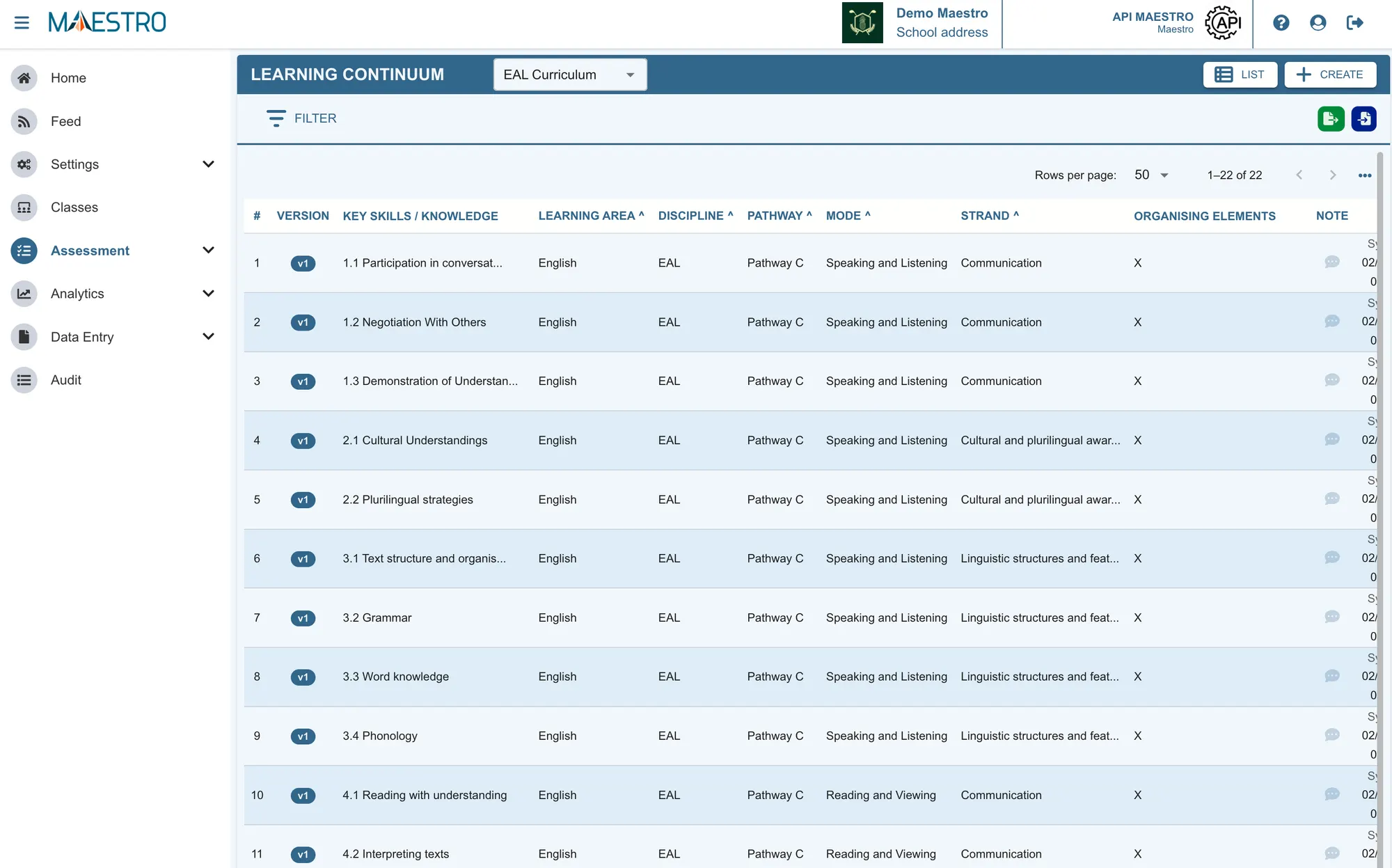
It started with assessment, continuous learning and developmental rubrics, tied to configuration. Each module below was added because the schools needed it.
What carries over to an ERP
Modular by design
Modules connected through configuration, so each organization uses what it needs and grows into the rest.
Built to be adopted gradually
Data from the tools a client already uses is ingested into the platform through integrations, SSO and APIs, so people migrate module by module with little friction.
Multi-tenant and isolated when needed
A new client is up in minutes. Those who want the full version run in their own production deployment, with their data isolated.
Control and recovery
Role-based access and an audit trail for every user, plus automated backups.
Evolution without starting over
More than five years of steady growth in clients and modules, delivered release by release on the same platform.
Does your process look like this?
Many processes live in paper, spreadsheets and people's habits. We start the way we started here: by listening to the people who run the operation.
Start a conversation